On-Shelf Availability
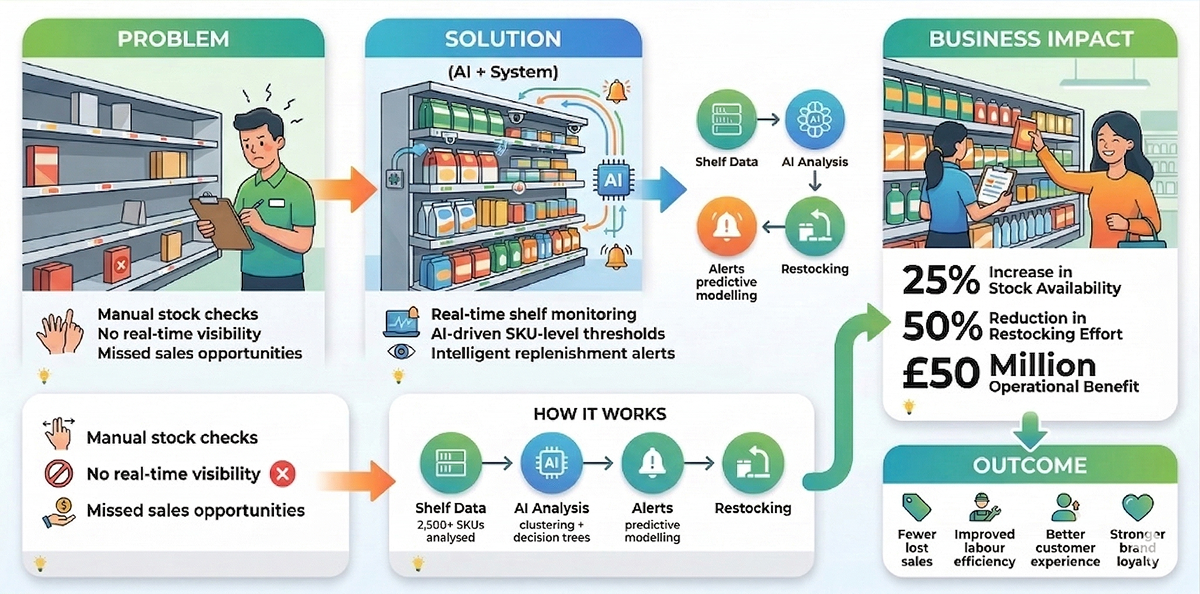
One of the UK’s leading supermarket chains, operating over 500 stores and serving 11 million customers weekly, faced a critical challenge in maintaining on-shelf availability. Despite high footfall, store associates relied on manual checks to identify stock gaps, often leading to missed sales and operational inefficiencies. The lack of real-time insights into product-level availability made it difficult to predict out-of-stock events or manage replenishment effectively. To address these inefficiencies, the supermarket partnered with Decision Studio to reimagine shelf availability using real-time data, advanced analytics, and smart technologies. The vision was clear: create a dynamic, tech-enabled environment that could proactively detect and address stock issues before they affected the customer experience.
Decision Studio began by enabling the supermarket’s stores with smart technologies—installing high-speed cameras and sensors to monitor shelf activity and customer flow. This data was then fed into advanced analytics models designed to calculate the Average Hourly Item Selling Rate (AHISR), determine dynamic SKU-level thresholds, and trigger replenishment alerts in real time.
To tailor replenishment strategies, Decision Studio classified over 2,500 SKUs across 450 stores using clustering techniques and decision trees. Products were segmented as Sizable, Actionable, or Differentiable, depending on their behaviour, volume, and intervention potential. Predictive metrics were developed using multivariate and linear regression analyses, while CHAID algorithms identified key product patterns. An intelligent alerting system was finally deployed to notify store associates before shelves ran empty—streamlining restocking and minimizing overstock.
25% increase in stock availability
The transformation resulted in a significant uplift in both efficiency and customer satisfaction. With over 2,500 SKUs optimized, the supermarket chain saw a 25% increase in stock availability and a 50% reduction in staff effort required for restocking. These operational improvements delivered a £50 million benefit, driven by fewer lost sales, improved labor efficiency, and enhanced customer experience.
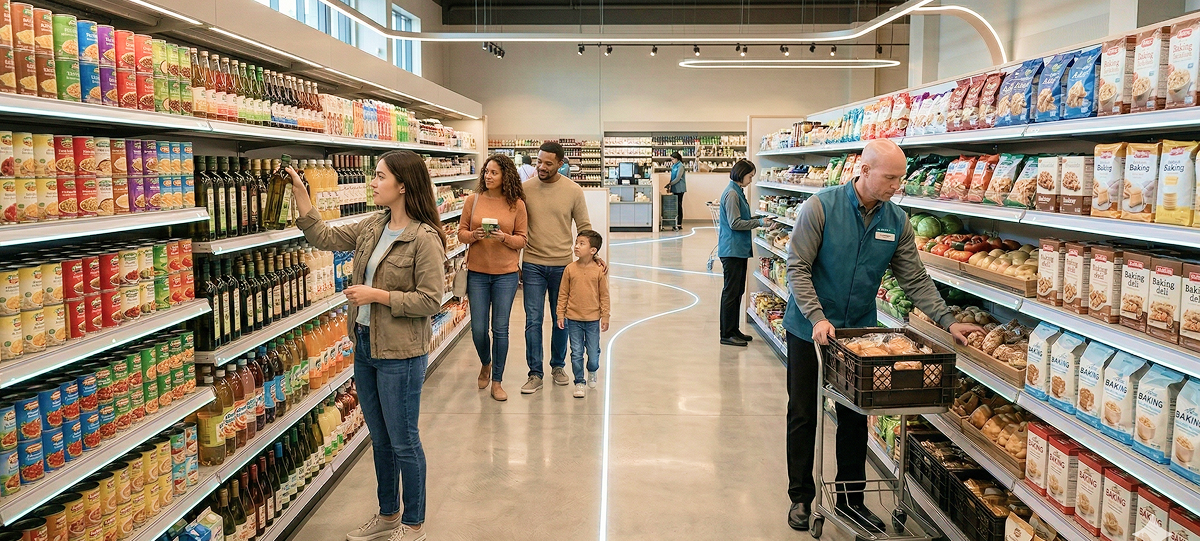
By shifting from reactive shelf checks to a proactive, real-time replenishment system, the supermarket now ensures that customers consistently find what they need—creating a more seamless, dependable shopping experience and strengthening brand loyalty.